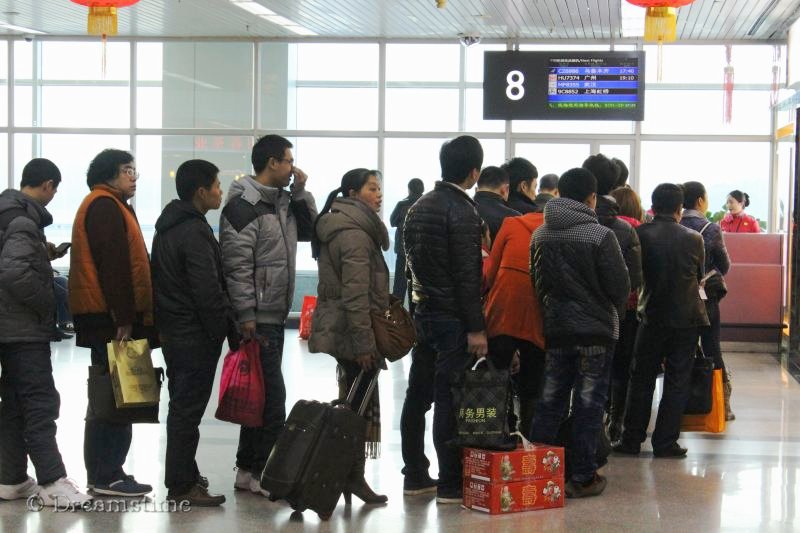
You need to include a measure word in Chinese; you can not say just four tickets, you need to add the measure word for things that are flat 四票sì piào between the number and the noun.
6. Which character for good fortune is widely seen at Chinese New Year?
木mù
福fú
夫fū
The character for good fortune 福fú has an interesting derivation. It is widely seen on Chinese gifts. Just to add to confusion it is often shown ‘upside down’
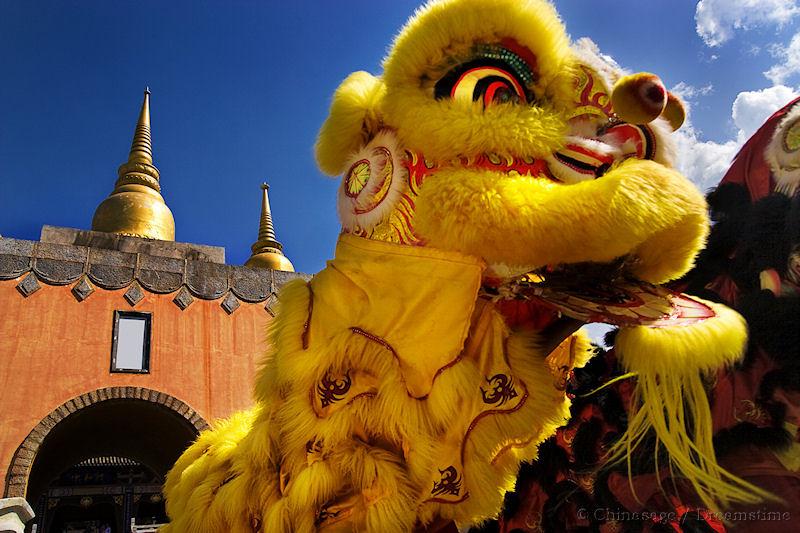
Traditional lion dance near a temple
7. How do you express 1,000,000 in Chinese?
双 shuāng
十万 shí wàn
百万 bǎi wàn
In China, the number 10,000 was considered innumerable and is used to express 'countless' and 'myriad'. Numbers greater than 10,000 are expressed as multiples of 10,000 up to 100,000,000 which would be 10,000x10,000 and is a new character 亿 yì.
8. To make a sentence to indicate an action is complete as in 'gone'; 'left'; 'bought' what can you do?
Prefix the sentence with 请qǐng
Add 了le after the verb
Add 吗mǎ at the end of the sentence
Changing the tense of a verb is easy in Chinese you do not have to learn declension or lots of new characters. Adding 了le to 买mǎi buy turns it into 买了mǎi le bought.
9. What is the Chinese word for green?
六liù
白bái
绿lǜ
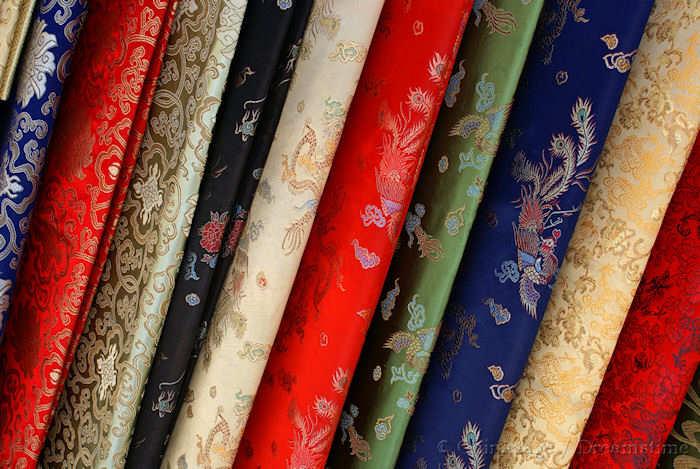
Both 绿lǜ and 红hóng contain the radical for silk in them, indicating the use of dyes to color cloth.

 Starter level quiz about the Chinese language.