Tough quiz about the geography, history, traditions and language of China (6)
1. Weifang, Shandong is famous for which Chinese tradition?
kite flying
gardens
weiqi
opera
Weifang, Shandong is particularly associated with kites, it holds annual competitions that attract enthusiasts from many countries.
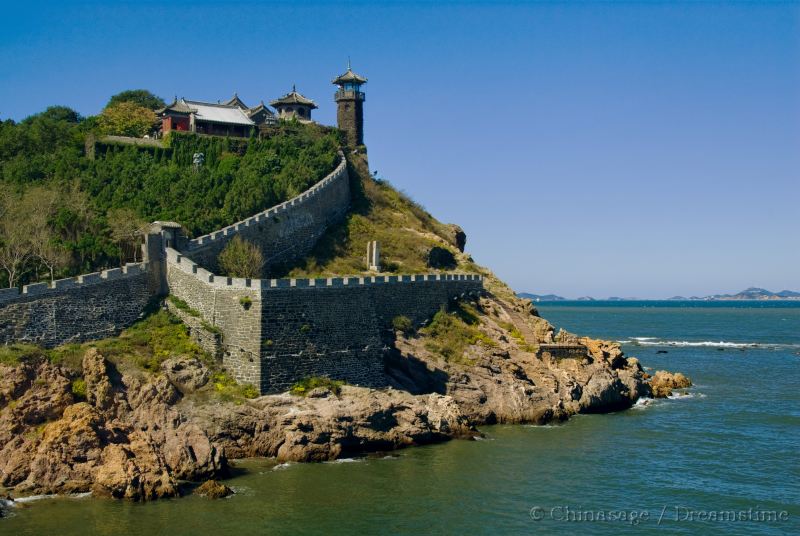
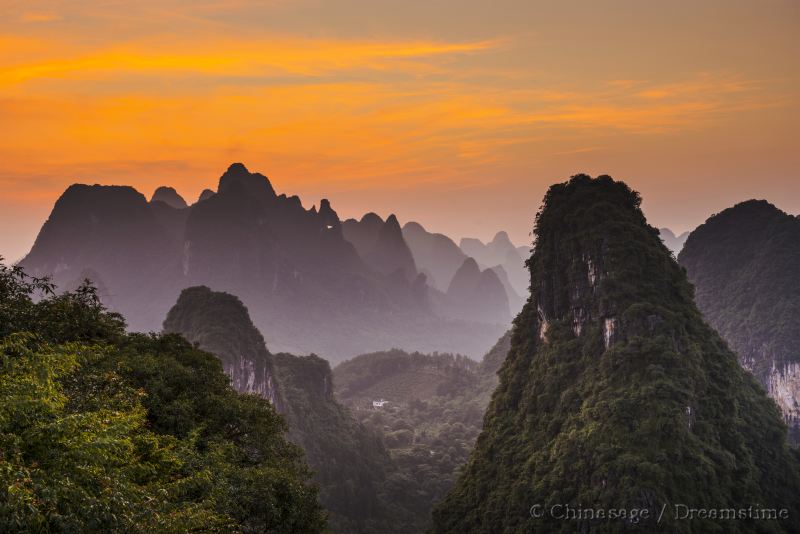
Penglai Pavilion at the northern tip of Shandong province
2. Lu Yu wrote a famous book in 762CE about what subject?
martial arts
Confucianism
warfare
tea
Lu yu (733-804) is considered the sage on the subject of tea. By this early date the cultivation of tea was already advanced and an elaborate tea ceremony had developed to imbibe the precious liquid.
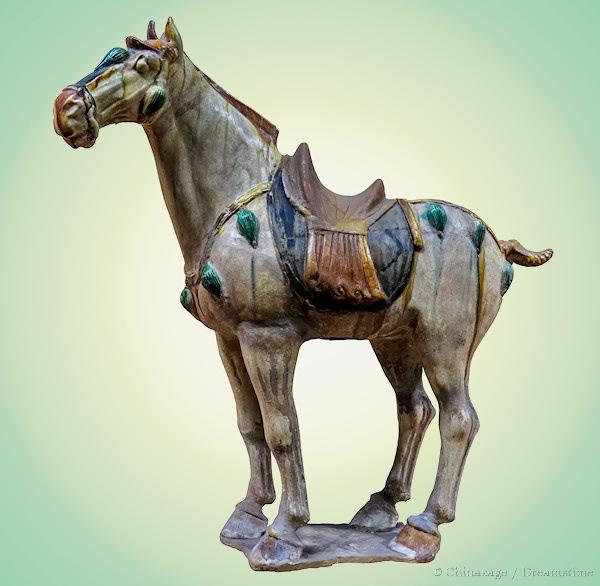
Tri-colored glazed pottery horse of the Tang Dynasty
3. The great Ming encyclopedia the 'Yongle Dadian' comprised about how many volumes?
11,000
8,000
5,000
500
Ming Emperor Yongle in 1403 set 2,180 scholars six years to produce an amazing work totaling 11,095 volumes. The Yongle Dadian aimed to collect all human knowledge in one great work - the Wikipedia of its day.
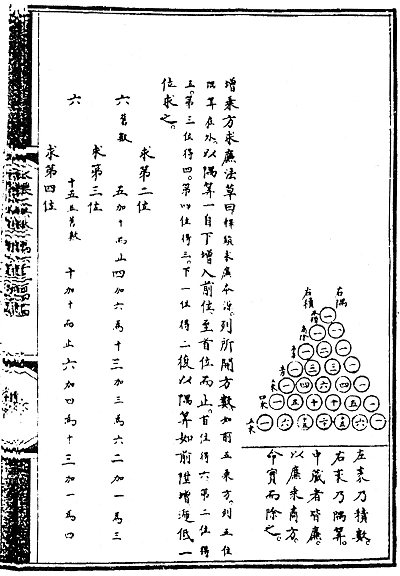
Yang Hui (1238-1298) 's work preserved in Yongle Encyclopedia. It shows what is now called a Pascal Triangle discovered by Chinese mathematicans 500 years before Pascal. Image by Yang Hui available under a Creative Commons License ➚
4. How many soldiers (pawns) does each side have in Chinese chess?
6
5
0
8
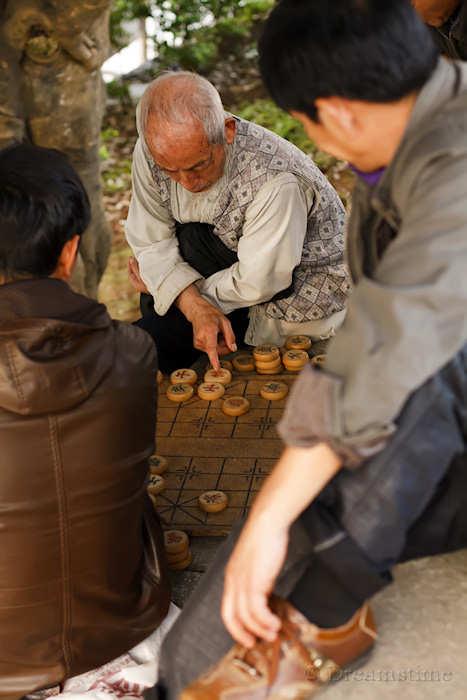
The five soldiers (pawns) are placed on alternate lines across the chess board. The board has 9 vertical lines so there are 5 soldiers. Each side has 16 pieces to begin with.
5. What percentage of the world's arable land does China possess to feed 20% of the world’s population?
20%
7%
30%
15%
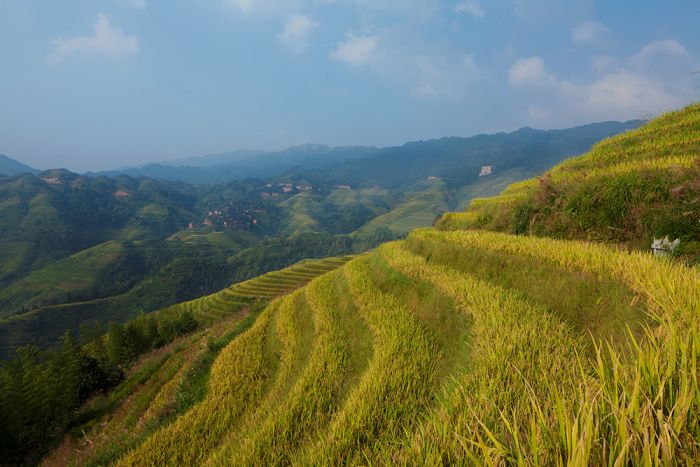
Much of China is desert or mountainous or both. It is only in the lowlands around the Yellow, Yangzi rivers and in Liaoning that the land is flat and supports intensive agriculture.
6. The Jade Gate (Jiayuguan), the main entry point into China on the Silk Road is located in which province?
Xinjiang
Gansu
Sichuan
Ningxia
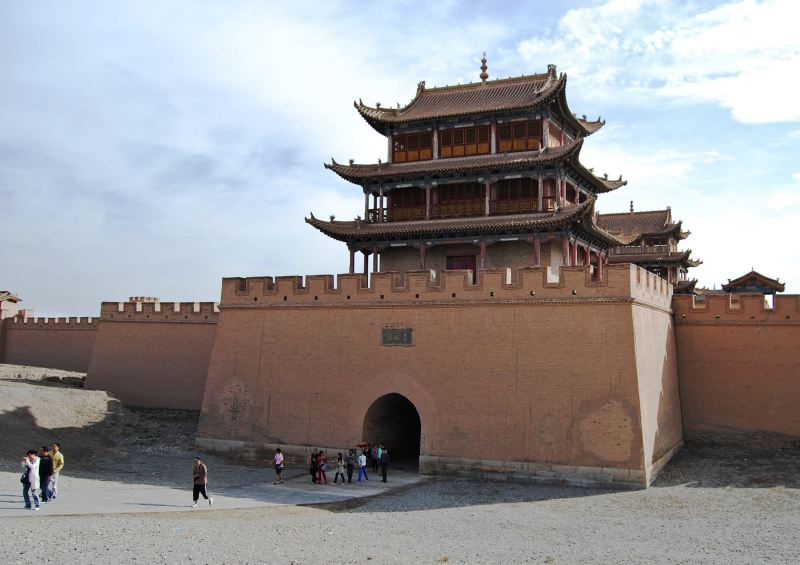
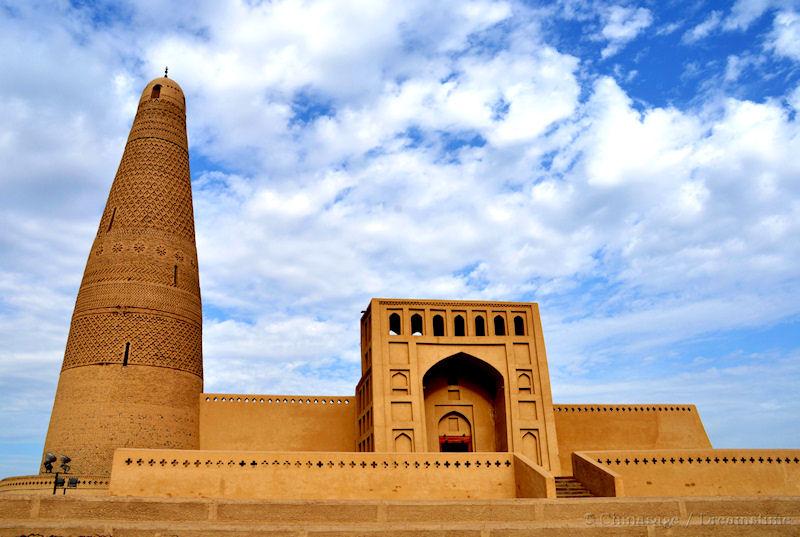
Built in 1372 of tamped soil the Jade Gate, Gansu controlled the narrow pass the Silk Road followed into China. The 35 feet [11 meters] high walls were wide enough for horses to ride along the top.
7. Qufu in Shandong is the birth place of which famous person?
Emperor Hongwu
Confucius (Kongfuzi)
Sun Yatsen
Mao Zedong
Confucius (23 Aug 551BCE - 479BCE) led what has been the leading philosophic tradition in China for much of her long history. The temple complex at his birthplace Qufu, Shandong rivals the splendor of the Forbidden City in Beijing.
8. Xi Jinping was born in Beijing but his father lived in which province?
Shaanxi
Hunan
Guangdong
Henan
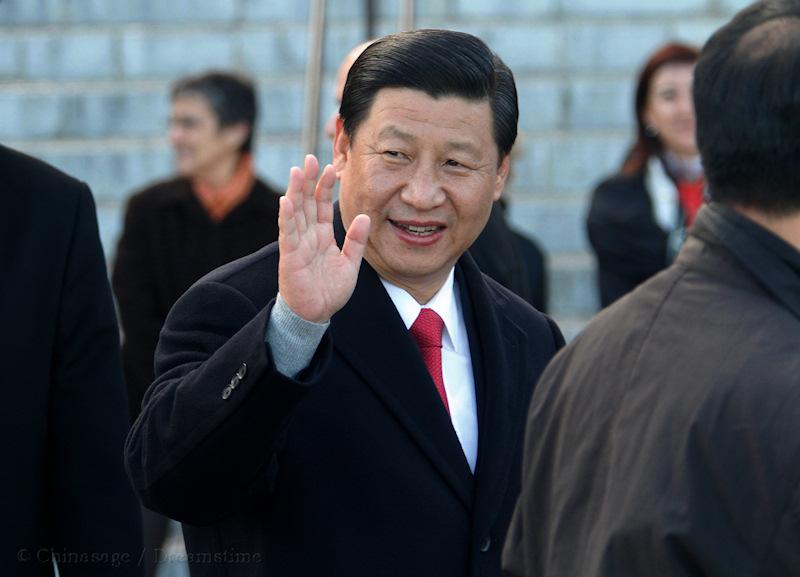
Xi Jinping was born in Beijing but his family has roots in Shaanxi province. His father, Xi Zhongxun was a leader of the Communist party from its earliest years rising to be Vice Chairman of the NPC.
President Xi Jinping during a visit to the island of Majorca, 2010
9. What is the name of the minority people included in Guangxi's official provincial title?
Uigyur
Miao
Tibetan
Zhuang
The Zhuang people number about 16 million and most live in Guangxi's extensive mountains. Several of the leaders of the Taiping Rebellion were ethnically Zhuang.
10. In ancient times the week in China consisted of how many days?
10
14
6
8
There is no astronomical basis for a seven day division of the year, unless perhaps, as roughly one quarter phase of the moon. The Chinese originally had a ten day week 旬 xún as this divides a month nearly precisely into three (four seven day weeks gives 28 days while three ten day weeks gives 30 days while the accurate month length is 29.53 days). At this time the days of the week were named after the Ten Heavenly Stems (tian gan). Most things in China were counted in tens in ancient times long before Napoleon.
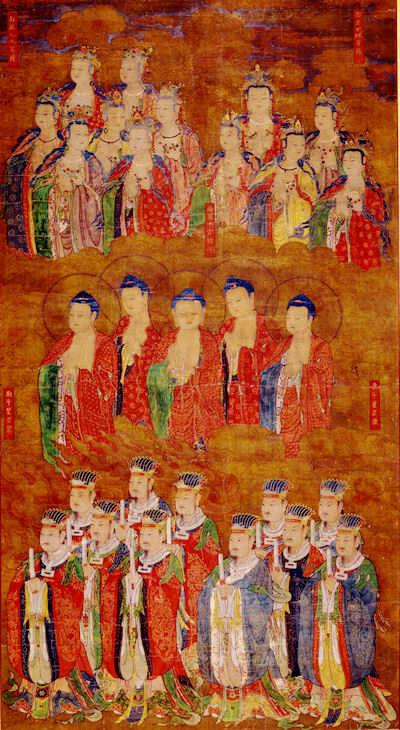
Celestial Buddhas and Deities of the Northern, Western, and Central Dipper Constellations. c.1500CE. Image by LACMA ➚ available under a Creative Commons License ➚
11. The famous poet Du Fu had a thatched house that can still be seen where?
Tianjin
Beijing
Xiamen
Chengdu
The great Tang dynasty poet Du Fu lived in the thatched house (759-763) close to the Nan River at Chengdu, Sichuan. He built the house himself.
12. China has land borders with many other nations, how many?
8
20
16
14
Fourteen neighboring countries : Korea (North), Russia, Mongolia, Kazakhstan, Kyrgyzstan, Tajikistan, Afghanistan, Pakistan, India, Nepal, Bhutan, Myanmar, Laos and Vietnam. Only Russia can claim as many but only by stretching a point.
13. What is considered the most unlucky number in China?
seven
four
thirteen
three
The number four in Chinese is 'si' which has unfortunately sounds like the Chinese for 'die'. To avoid the bad luck some buildings do not have a fourth floor and streets do not have a house number four.
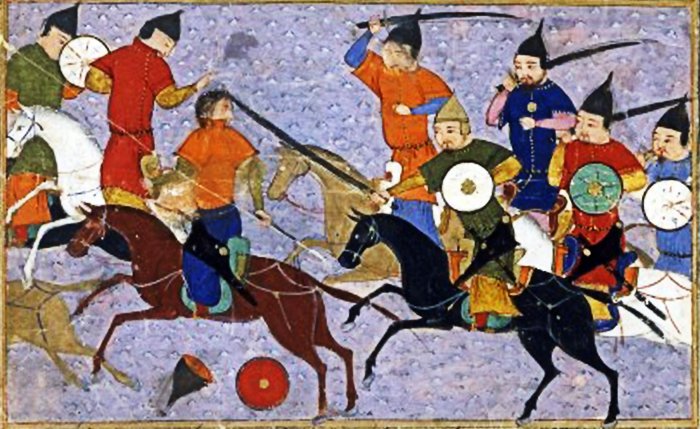
Battle between Mongols and Chinese (1211). Painted 1430.
Image by Sayf al-Vâhidî. Hérât. Afghanistan available under a Creative Commons license ➚.
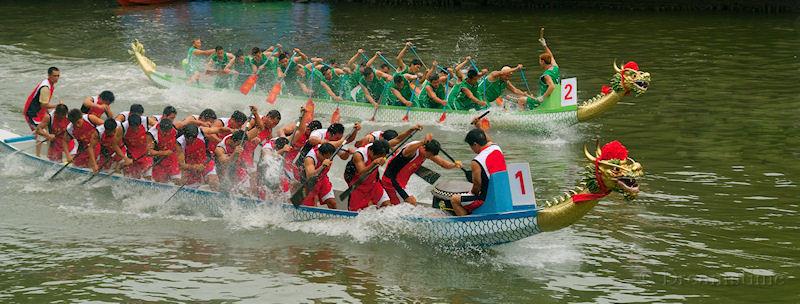
14. The Dragon boat festival is associated with which historical figure?
Zhuge Liang
Confucius
Emperor Hongwu
Qu Yuan
According to legend when the poet Qu Yuan drowned himself in the Miluo river, people went out in boats to look for his body. The Dragon Boat festival commemorates this event but also an older festival associated with asking dragons to bring rain for the crops.
16. When did the island of Taiwan/Chinese Taipei first become a part of China?
246
1683
818
1912
The island of Taiwan was fiercely independent of China for much of its early history. It was briefly settled by the Dutch before Ming loyalist Guoxingye ejected them and it became his last refuge against the Manchu conquerors. The Manchus defeated him and the island was added to the Chinese empire where it remained for 200 years before being ceded to the French and then the Japanese.
17. What is the doctrine of 'Wen and Wu' all about?
Navy and army
Chess strategies
Retreat and advance
Soft and hard foreign policy
As far back as the Han dynasty the Wen-Wu strategies were developed. The doctrine of 文 wén (cultured debate) and 武 wǔ (military force) became central. Among friends and citizens people were persuaded by intellectual debate (soft power), foreigners and rebels on the other hand should be treated with military force (hard power).
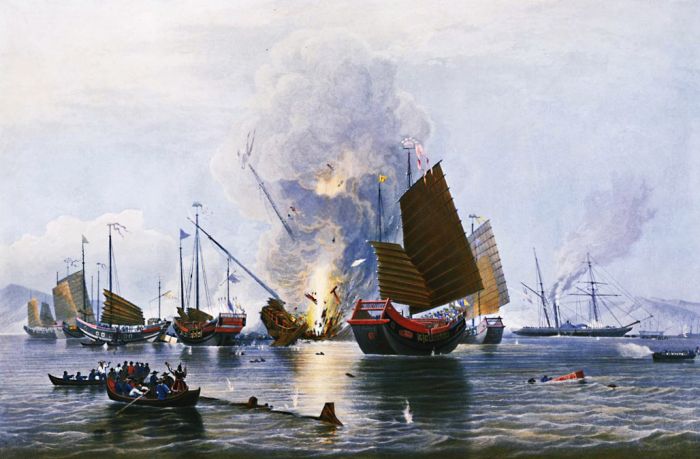
The East India Company iron steam ship Nemesis, commanded by Lieutenant W. H. Hall, with boats from the Sulphur, Calliope, Larne and Starling, destroying the Chinese war junks in Anson's Bay, on 7 January 1841. Image by Edward Duncan ➚ available under a Creative Commons License ➚
18. Which ancient classic stimulated the study of binary arithmetic and paved way to modern computing?
Spring and Summer Annals
Book of Zhuangzi
Analects of Confucius
Book of Changes (Yi Jing)
The Book of Changes (Yi Jing or I Ching) is a set of all possible 64 combinations of six broken or unbroken lines. Gottfried Leibniz (1646-1716) was greatly encouraged in his study of the binary number system by the apparent use of binary in the ancient Chinese Yi Jing.
19. What proportion of the population of Singapore are ethnically Chinese?
30%
50%
77%
60%
There are about 25 million Overseas Chinese in Taiwan; Hong Kong and Macau; 20 million in south-eastern Asia and about 5 million elsewhere in the World. In Singapore the Chinese hold 81% of the nation's wealth.
20. 'River elegy' was the ground-breaking TV programme that sparked much debate and protest in which year?
1988
1990
1995
1978
'River Elegy' caused immense controversy in mainland China due to its negative portrayal of Chinese culture. Many believe it led directly to the Tiananmen Square protests of 1989.

 Tough quiz about the geography, history, traditions and language of China (6)