History quiz all about Chinese history - a bit harder.
1. The An Lushan revolt took place in which dynasty
Ming
Tang
Han
Song
An Lushan was of Turkish/Sogdian descent and while still illiterate became the slave of a Chinese military officer. He soon learned his letters and became an interpreter and rose to become military governor-general to the fractious border regions. He inveigled himself into Emperor Xuanzong's inner circle and then launched a rebellion.
2. Shenzhou is the name of a high profile programme for what purpose?
space exploration
nuclear power generation
environmental protection
medical research
Shenzhou 神舟 meaning roughly 'Ship of the Heavens' and began in 1992 it aims to put a Chinese person on the moon and set up a space laboratory.
3. Puyi was Emperor of Manchuguo 1934-45 where was his capital?
Jilin City
Anshan
Changchun
Shenyang
At this time Changchun (meaning Eternal Spring) in Jilin province was known as ?Xinjing? (New Capital). Emperor Puyi had hopes of regaining the Chinese Imperial throne. As hereditary leader of the Manchu people he had the right to claim himself leader of Manchuria then under Japanese occupation.
4. 'Rats and foxes' was a term used by Dowager Empress Cixi for which group of people?
English diplomats
Han Chinese
Imperial eunuchs
Canton merchants
A significant reason for the fall of the Qing dynasty was the intransigence of the Imperial eunuchs. They feared reform as it threatened them and they were in a strong position to block it. Dowager Empress Cixi was a prisoner in her palace, unable to act without the eunuchs approval.
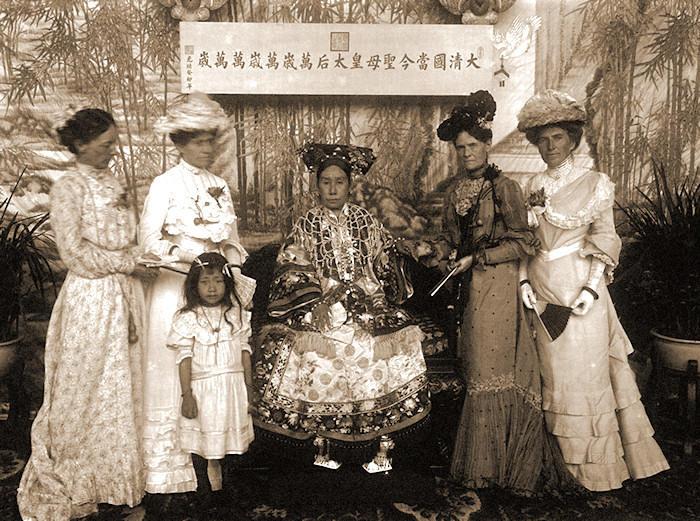
Dowager Empress Cixi with the wives of European diplomats in western clothing standing on either side, together with an adopted Chinese orphan. 1902.
Image from http://puyi.netor.com/gallery ➚ available under a Creative Commons license ➚.
5. When did China detonate its first atom bomb?
1980
1964
1950
1976
The explosion of the first Chinese atom bomb on October 16th 1964 (from a project begun with Russian technical help) marked China's admission into a very select group of nuclear defended nations.
6. The battle of Yamen marked the end of the Southern Song dynasty, where did it take place?
Zhejiang
Shandong
Guangdong
Beijing
The remnants of the Southern Song dynasty fled by boat from their capital at Hangzhou. The naval battle on 19th March 1279 in at Yamen, Guangdong saw the final defeat and suicide of the last Song emperor.
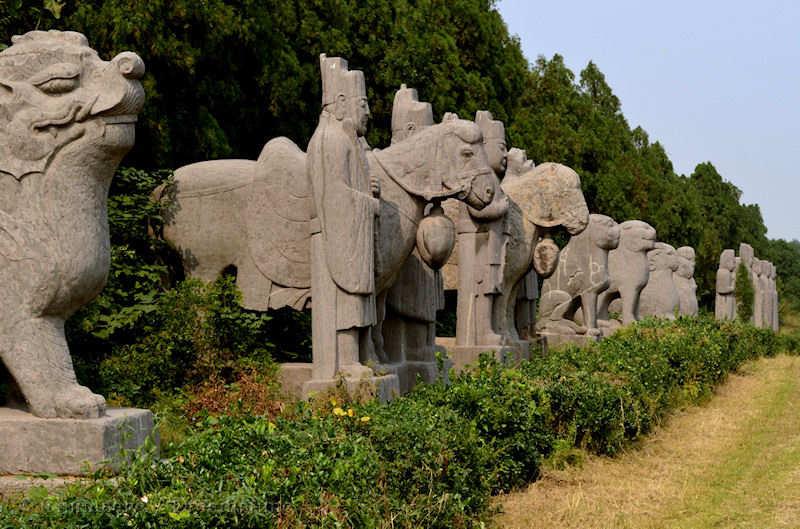
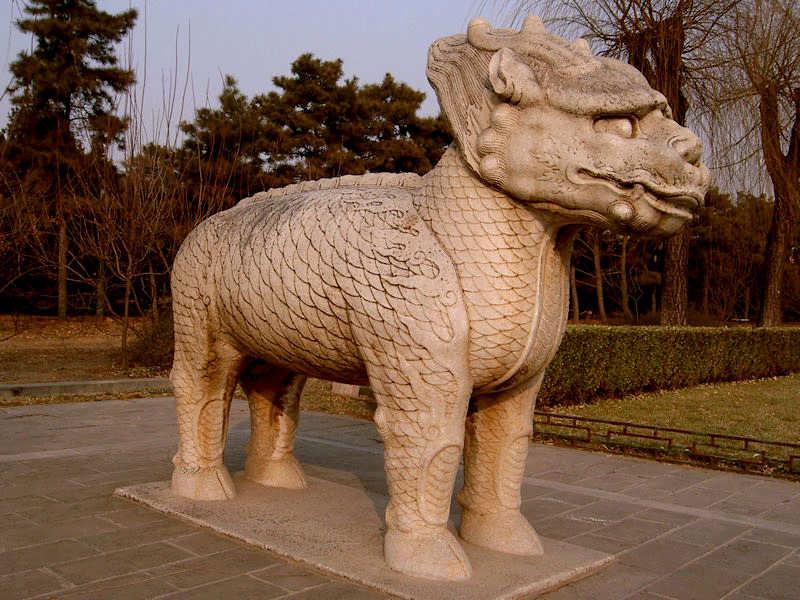
Stone Statues guarding the Sacred Way at the Song Dynasty Imperial Tombs, Gongyi, Henan
7. The most senior lama after the Dalai Lama in Tibetan buddhism is who?
President of China
Karmapa Lama
Potala Lama
Panchen Lama
The Panchen Lama is important because it is he who decides is the next reincarnation of the Dalai Lama (spiritual leader of Tibetan people). It is claimed that the current Panchen Lama is kept under house arrest by the Chinese government.
8. What was the central doctrine of the Taiping rebels?
The Kojiki
Dao de Jing
The Rig-Veda
Ten commandments
The leader of the Taipings, Hong Xiuquan, developed his own version of Christianity with the Ten commandments as the core set of beliefs.
Taiping rebels are chased out of Yuzhuang, March 8 1854. The Taiping arrived the previous day but had to retire the next day when the Manchus arrived in hot pursuit. From Ten scenes recording the retreat and defeat of the Taiping Northern Expeditionary Forces, February 1854-March 1855.
Source : web site ➚
Available under a Creative Commons license ➚.
9. The first books in China were made of what?
beech tree bark
paper
papyrus
strips of bamboo or wood
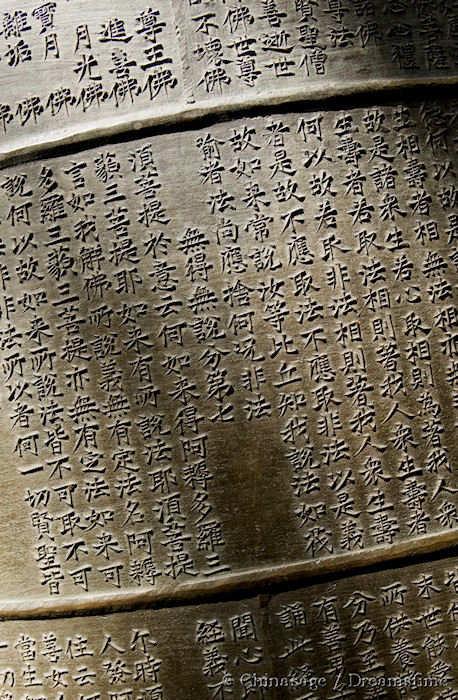
Bamboo and wooden slips were used for writing in China before the invention of paper. Bamboo was split lengthwise into strips about eight inches long.
Ancient script of Zhou through to Shang dynasty date inscribed on bronze vessel
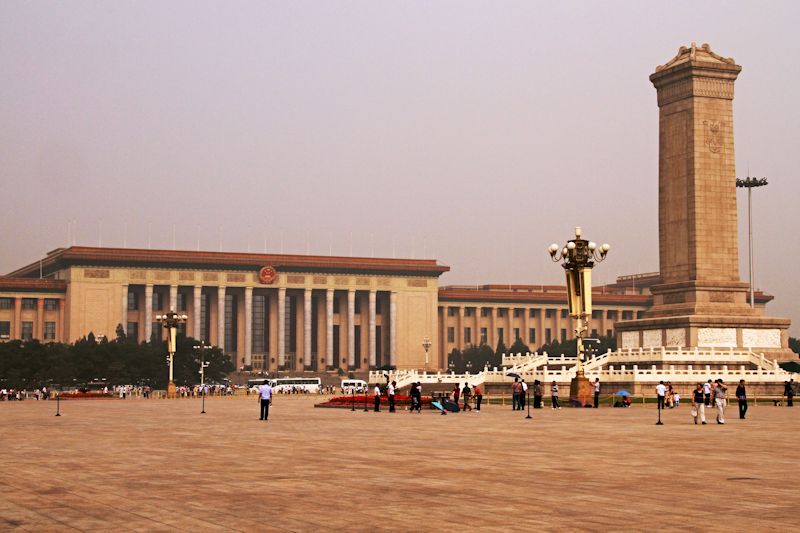
10. The 10,000 ton sculpture in Tiananmen square commemorates what?
October 1st 1949
Heroes of the People
Lu Xun
January 1st 1912
Construction lasted from August 1952 to May 1958. Eight revolutionary scenes are depicted from the 1st Opium war through to the Chinese Civil War.
11. Cao Pi declared himself the founder of which dynasty in 220CE?
Jin
Wei
Liang
Zhou
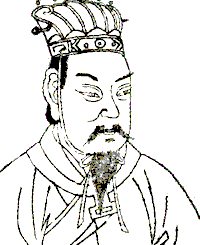
General Cao Cao placed his son Cao Pi on the throne on the fall of the Han dynasty. Cao Cao's daughter had married the last Han Emperor Xiandi. The new dynasty did not have control over the whole of China, only the northern kingdom of Wei.
12. The Jinggang Mountains are famous for what?
rare monkey
base of Jiangxi soviet
Han dynasty battle
birthplace of Chiang Kaishek
The Jinggang Mountains is known as the birthplace of the Chinese Red Army. The beleaguered Communist forces were hemmed in to the remote mountains in Jiangxi. It formed the Jiangxi soviet 1931-34 before they set off on the Long March.
13. Xuanzang's trip to fetch Buddhist scriptures from India took place during which dynasty?
Three Kingdoms
Han dynasty
Sui dynasty
Tang dynasty
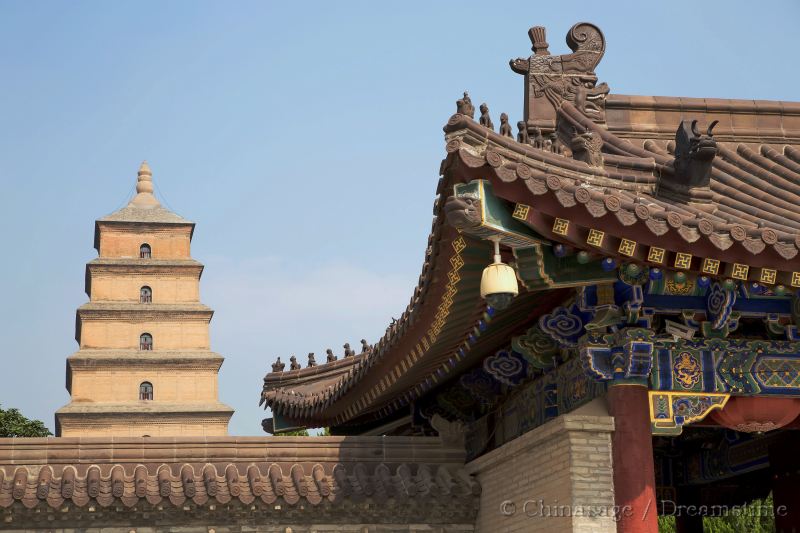
The famous journey, fictionalized in the 'Journey to the West' brought many scriptures back to China from India. Tang Emperor Taizong built the Great Wild Goose Pagoda at Xi'an to house the books.
Large Wild Goose Pagoda, is a Buddhist pagoda located in southern Xi'an, Shaanxi
14. The banker H. H. Kung married who in 1914?
Song Yaoju
Song Guofeng
Song Meiling
Song Ailing
Song Ailing was the eldest of the famous Song sisters and married the rich banker H.H. Kung (a direct descendent of Confucius), Song Qingling married Sun Yatsen and Song Meiling married Chiang Kaishek forming the most powerful family at the time.
15. Which leader put the Gang of Four under arrest?
Mao Zedong
Deng Xiaoping
Zhou Enlai
Hua Guofeng
The Gang of Four soon lost control after Mao Zedong's death on 9th September 1976. Hua Guofeng became the new Chairman and the gang (including Jiang Qing) was arrested on 21st October 1976 and put on trial bringing the cultural revolution to an end.
Wen Jiabao was premier under President Hu Jintao. Wen was dubbed ‘the people’s premier’ by both domestic and foreign media because he tried to ensure that China's increasing wealth benefited the rural poor.
17. In 1980 China set up a number of Special Economic Zones (SEZ) to promote rapid economic development. Which one of these was NOT a SEZ?
Hainan Island
Shenzhen
Shantou
Xi'an
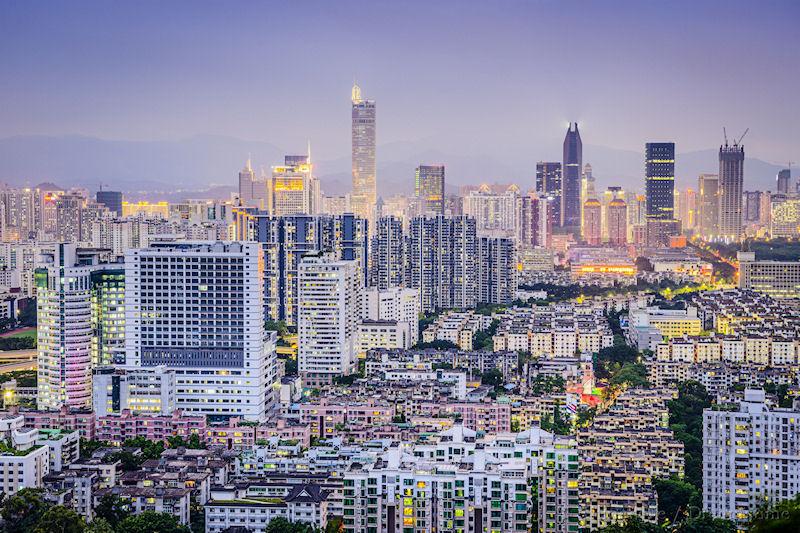
Goaded by the continuing prosperity of Hong Kong and Singapore under Deng Xiaoping set up the first SEZs in southern China in 1980. More were created in 1984 all over China.
18. Which writer wrote with dismay about the destruction of the Old Summer Palace in 1860?
Charles Dickens
Honore de Balzac
George Eliot
Victor Hugo
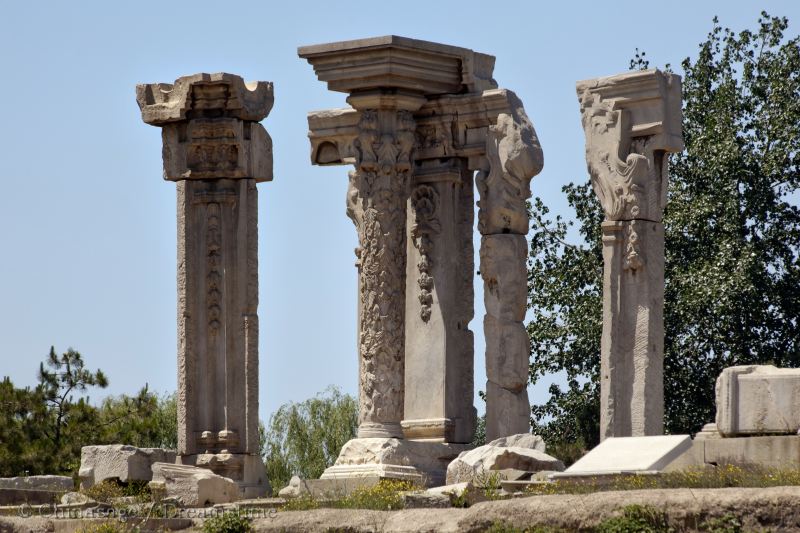
Qing Emperor Qianlong built the Old Summer Palace as a number of fine palaces set among gardens, hills and lakes on the site of a 12th century park. The parkland palace bore the brunt of Anglo-French attacks in 1860 at the end of the Second Opium War.
Ruins of the Old Summer Palace (Yuan ming Yuan) Beijing. It was destroyed by British and French Army in the Second Opium War
19. The Yongle Dadian was what?
encyclopedia
race course
military academy
essay competition
The 永乐大典 Yǒng lè dà diǎn was to be an encyclopedia of all known scholarship on all subjects arranged into categories. It took 2,180 scholars six years to produce an amazing work totaling 11,095 volumes - the Wikipedia of its day.
"Ways of souls" tombs of the Emperors of the Ming Dynasty (1368 to 1644CE). 50km north west of Beijing, in Changping. December 2005. Image by ofol available under a Creative Commons License ➚.
20. In which city was Sun Yatsen kidnapped in 1896?
Guangzhou
Shanghai
Paris
London
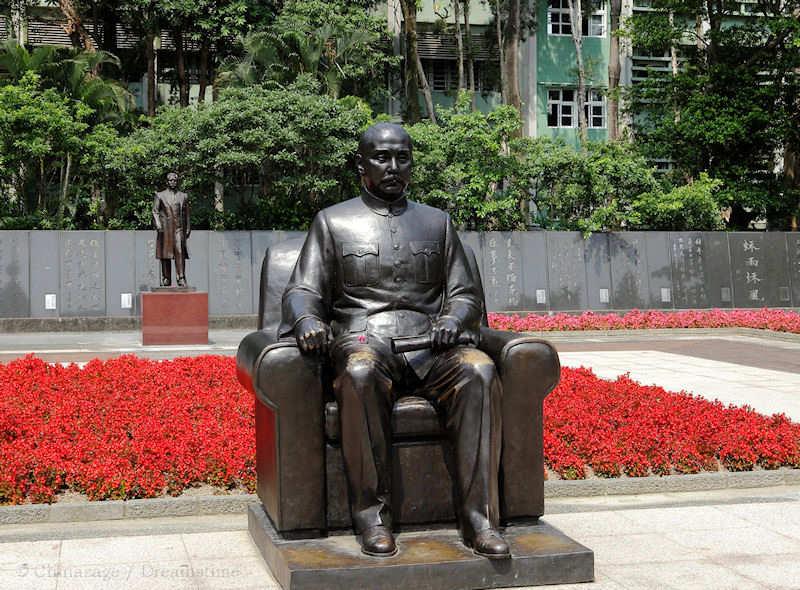
Sun Yatsen traveled widely, seeking the support of groups of Overseas Chinese to aid the overthrow of the Qing dynasty. In London he was kidnapped by agents of the Chinese embassy. It was pressure from a campaign in the British press from Sun's friends and supporters which led to his release within a month.
Statue of Dr. Sun Yatsen at memorial hall in Taipei, Taiwan

 History quiz all about Chinese history - a bit harder.